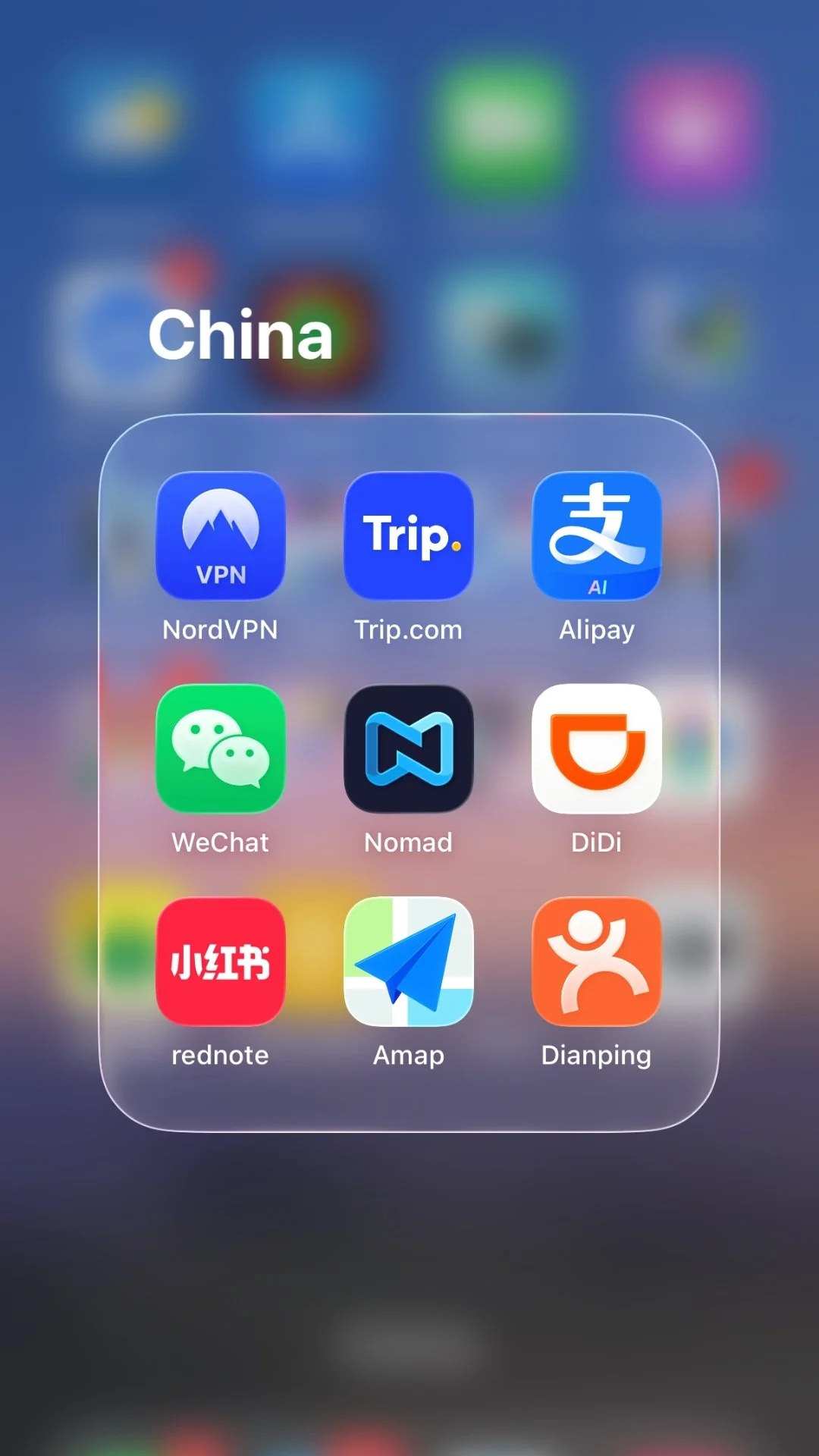
8 Essential Apps For China
You probably already know that China runs on completely different digital infrastructure.
Most of the apps and websites that we use are blocked, and the country operates almost entirely on its own tech ecosystem.
If you don't read Chinese or understand how that ecosystem works, it can be pretty overwhelming.
Luckily, I had the safety net of a group tour for the majority of my itinerary, but even then, having the right apps downloaded gave me a sense of security and confidence that I could figure things out if I got lost or separated.
So if this is your first time in China, do yourself a favor and set these up before you land. Here are the top 9 apps that you should download before your China trip!
-
Alipay (支付寶)
WeChat (微信)
Trip.Com
DiDi (滴滴出行)
eSIM
Amap (高德地图)
Dianping (大众点评)
Xiaohongshu (小红书)
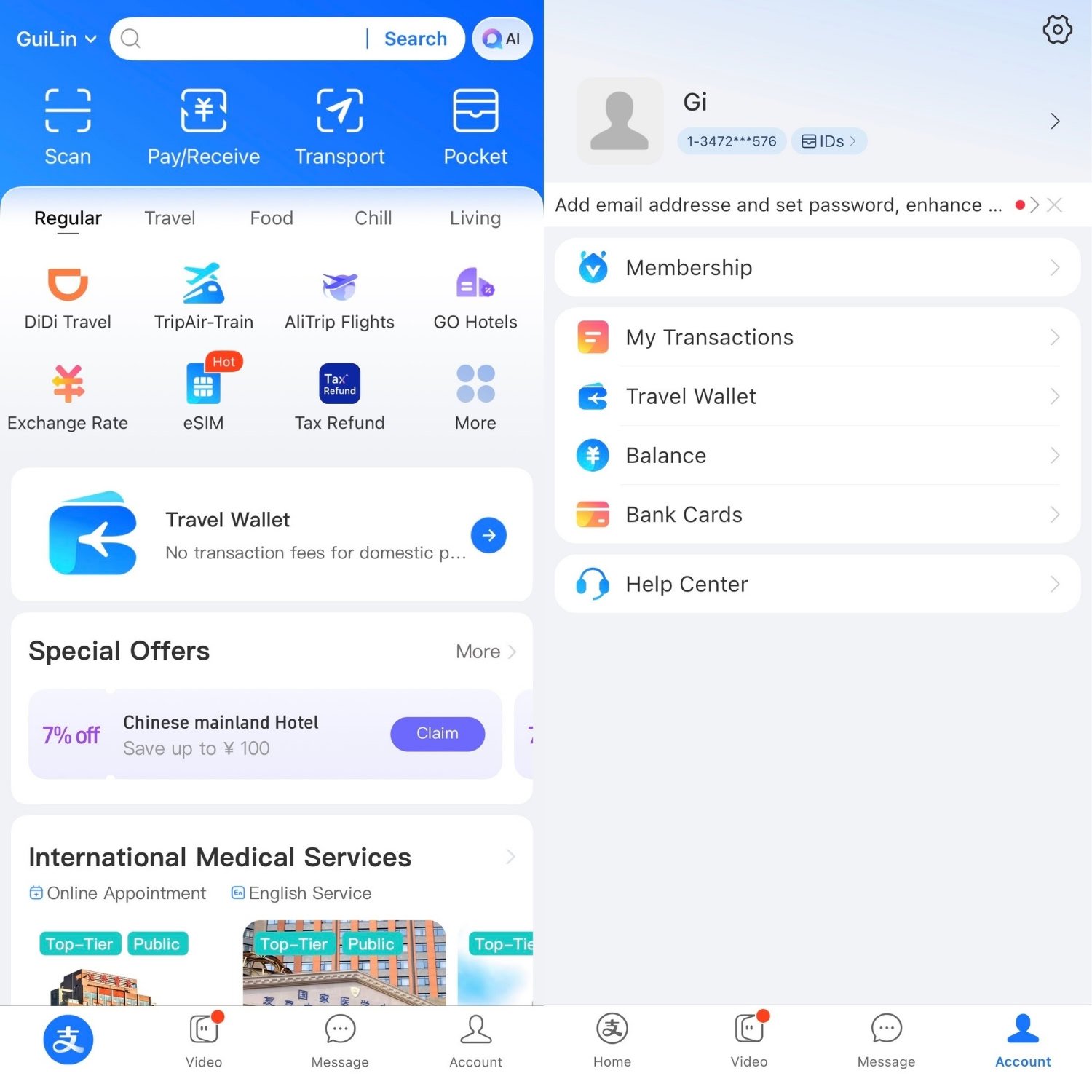
1. Alipay (支付寶)
Your one-stop-shop for payments in China.
China is now largely a cashless economy and Alipay is one of the two biggest apps that allows you to buy things just with your phone.
Link your home credit card so that you can scan-to-pay for street food, tap into subway gates, and handle everyday purchases like a local.
Note: I will say that security measures are sometimes a huge pain. I use my Capital One Venture X card for all my travels, but my payments kept getting blocked!
This was probably more on Capital One than Alipay, but waiting for my payment to clear every.single.time I need to make a tiny purchase gave me so much unnecessary anxiety.
You can probably mitigate this by setting up multiple cards from different banks, but I just wanted to share my personal experience.
Also, if you're running into a similar issue, I found that it's best to just ask the vendor to scan your QR payment code instead. It's a lot less fussy and more likely to go through.
2. WeChat (微信)
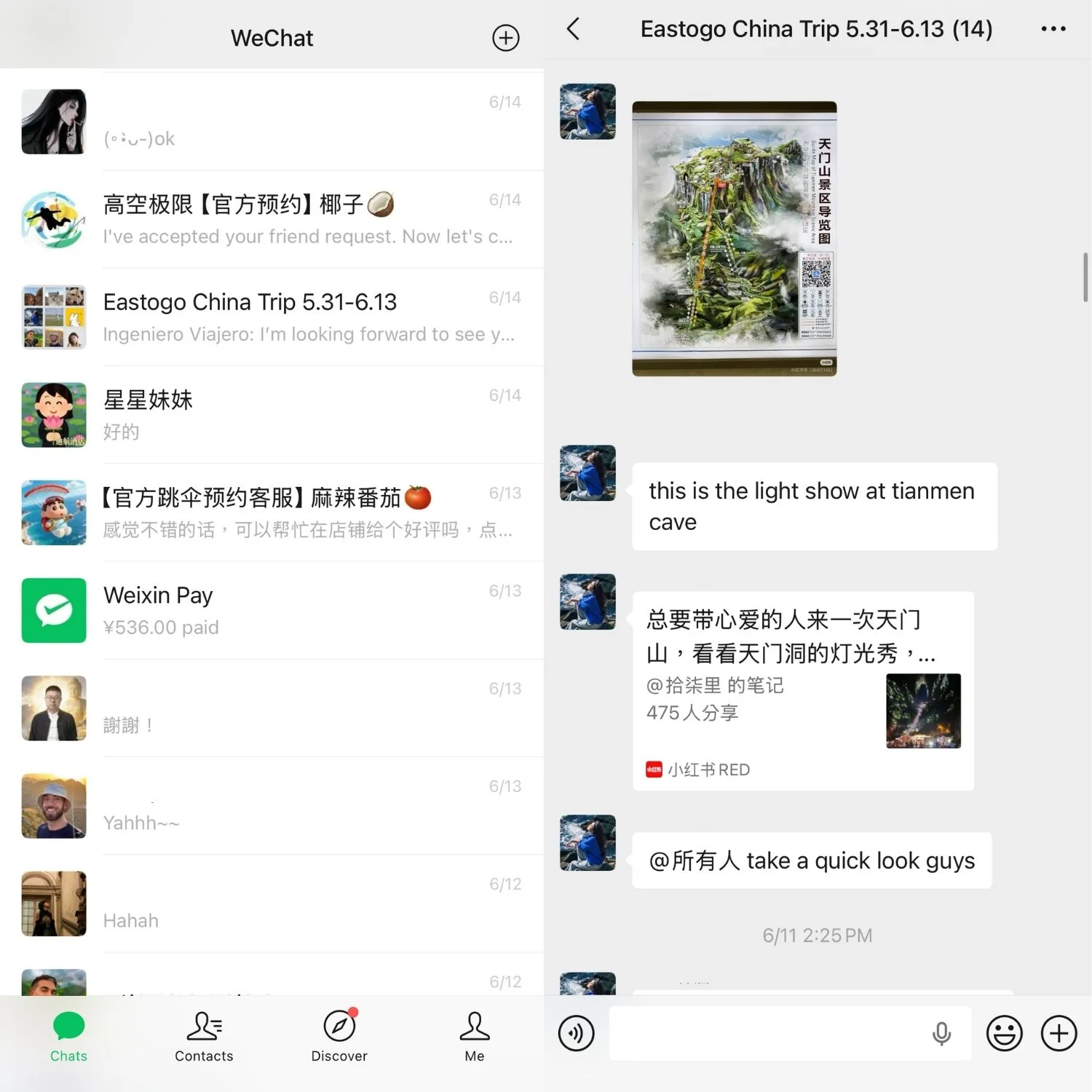
While WeChat originally started as a messaging platform, it has evolved into so much more. Maps, social media, mobile payments... you name it!
On my trip, it served as my backup payment system. And since Alipay kept messing up, I found that I basically had to rotate every other day just to pay small vendors.
Beyond that, I used it to message local tour providers, scan restaurant QR codes to order food, and navigate to group meeting points. It's pretty intuitive to use and surprisingly helpful in day-to-day operations.
3. Trip.Com
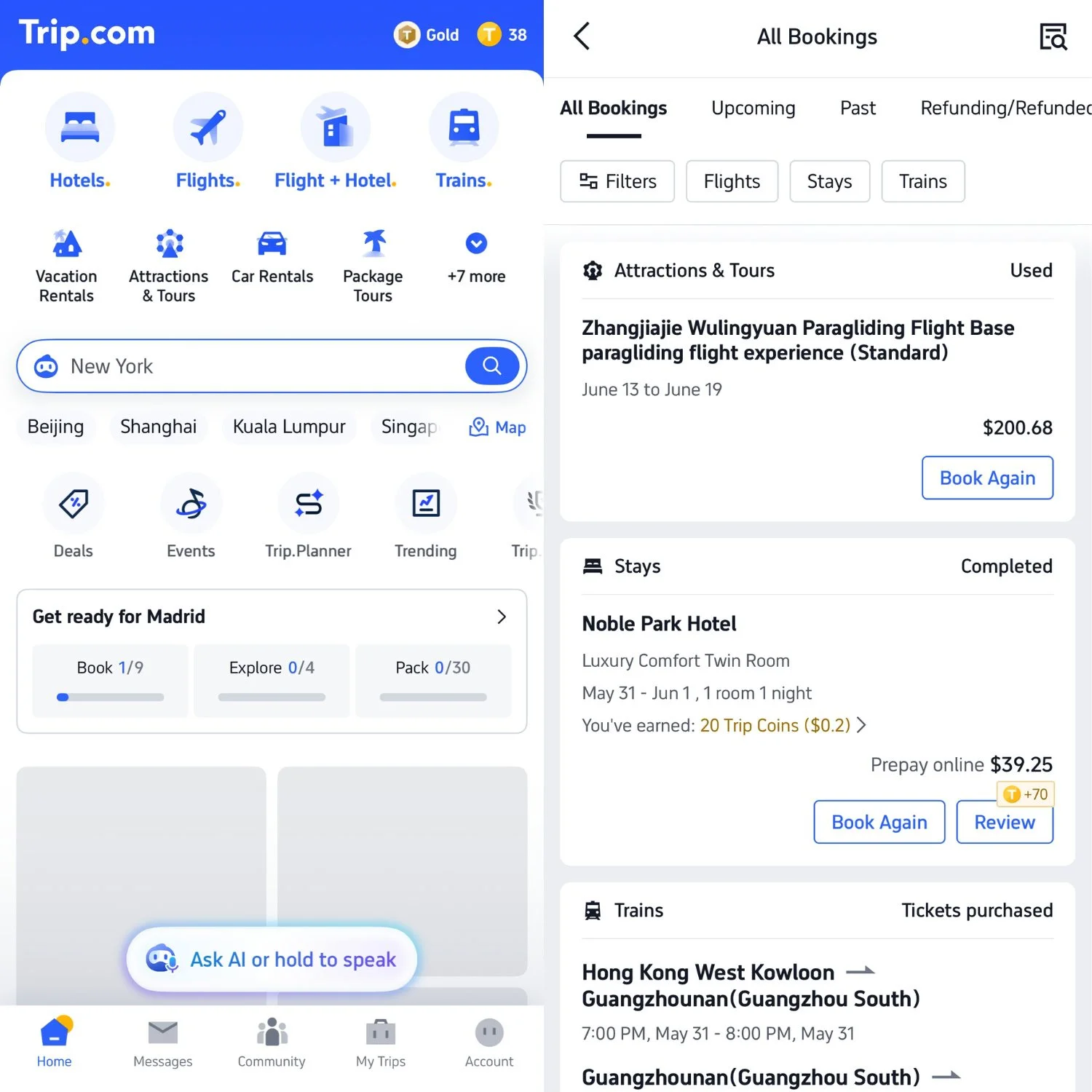
I like to keep all my bookings in one place so Trip.com came in clutch!
It's a stress-free, English-friendly, all-in-one booking hub for hotels, train tickets, local flights, and attractions.
I honestly had so much fun browsing through all the unique local offerings and even booked our paragliding in Zhangjiajie experience through it.
Though it's clearly geared towards foreign travelers, I found the deals to be reasonably priced and vendors to be fairly reliable.

4. DiDi (滴滴出行)
DiDi is China's largest ride-hailing app.
It’s super easy to set up and integrates directly with Alipay.
I used it to grab a taxi from our hotel in Zhangjiajie to our paragliding experience, and again from the Shanghai airport to our hotel during our layover. All you do is match the license plate when the car arrives, hop in, and the payment automatically processes through Alipay when you get dropped off.
5. eSIM
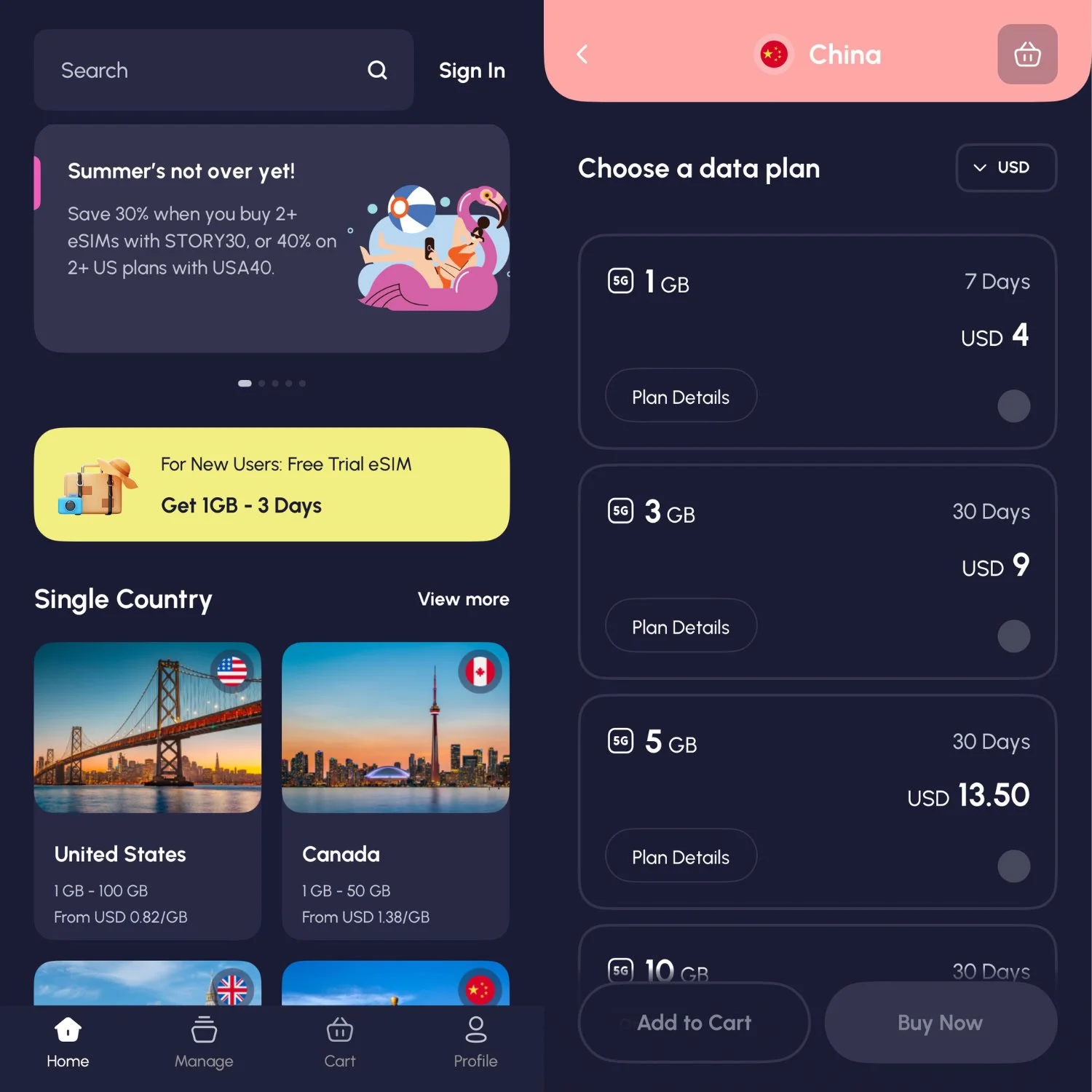
While it's not technically an app, an eSIM is absolutely essential if you're visiting China.
It allows you to automatically bypass the Great Firewall because it routes through international regions, saving you the headache of finding a reliable VPN.
I used Nomad for my two week journey and the connection was pretty strong even when we were in the mountains of Guangxi. However, I've also heard good things about Airalo or Sim Local, so you can compare and make the decision that's best for your travel style.
6. Amap (高德地图)
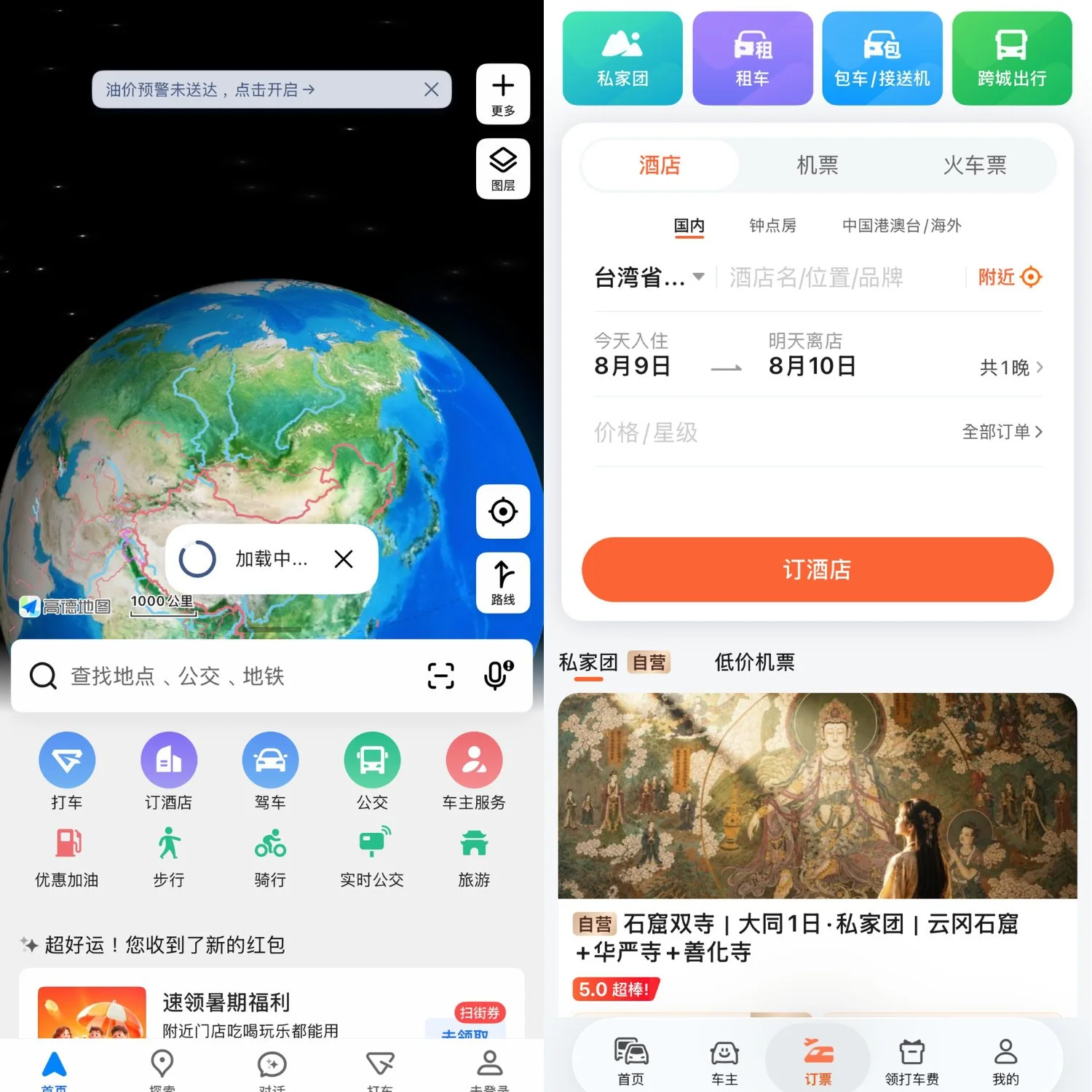
Google Maps won't work in China, so your best bet is AMap (Gaode Maps) instead!
I was trying to find a pharmacy in Yangshuo and Google Maps literally wouldn't even show the streets and road names. As someone who relies heavily on maps while traveling, hitting the streets without a reliable one gave me massive anxiety.
Thankfully, Amap worked just fine!
It's super intuitive to figure out and gives you accurate walking directions and real-time public transit schedules across the country.
7. Dianping (大众点评)
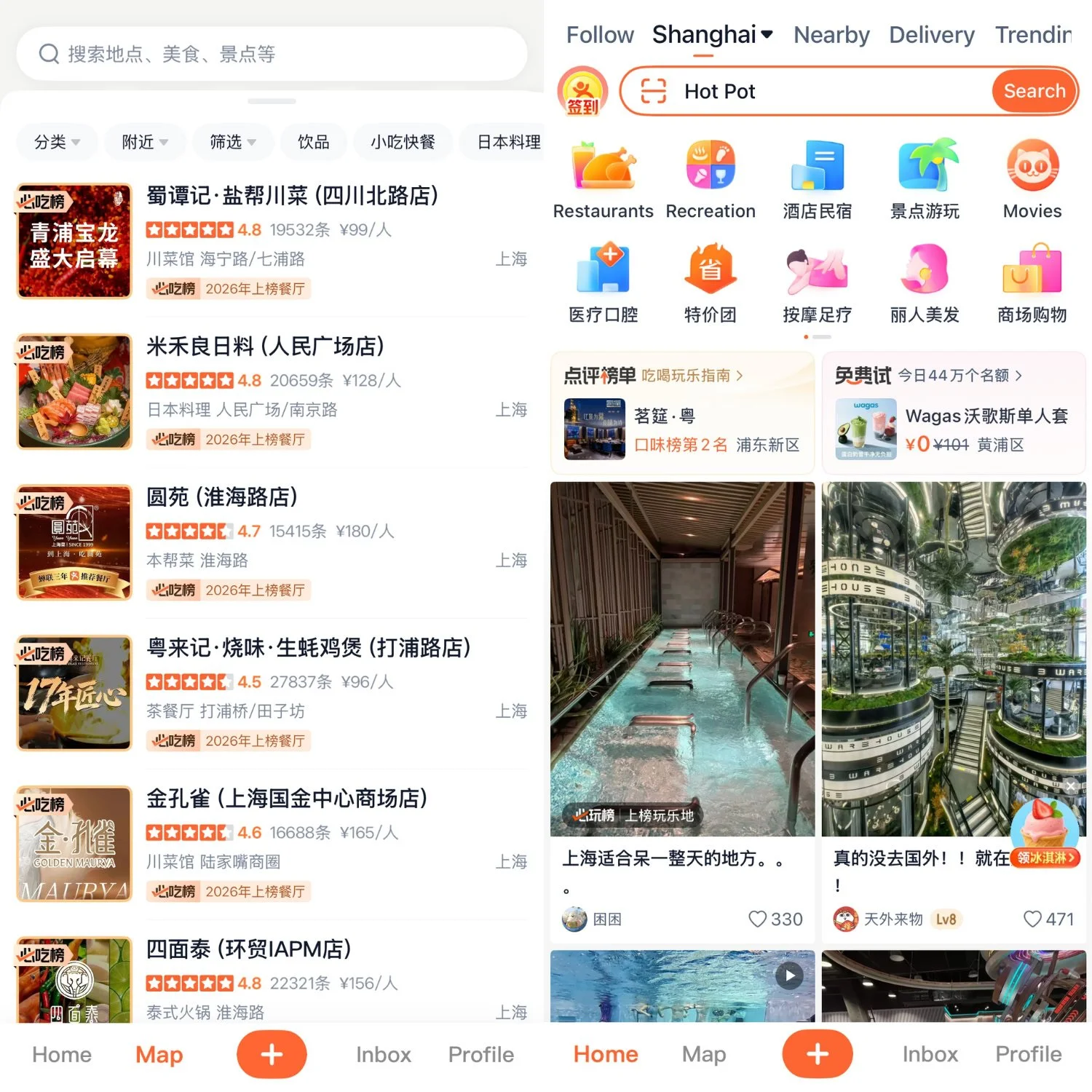
If you're looking for actual local recs, look no further than Dianping!
It's kinda like China's version of Yelp or Trip Advisor--perfect for looking at actual reviews and finding local gems nearby.
I'd say that anything with a 4.5 rating or above is worth checking out, but be wary of anything that's too high (4.8 or above) with thousands of reviews. It's likely that they're offering some sort of incentive for good reviews or might just be overhyped.

9. Xiaohongshu (小红书)
You've probably already heard of Xiaohongshu (or RedNote), especially if you caught any of the viral "Rednote exodus" chatter in January 2025 but basically, it's China's version of Instagram/Pinterest.
It's a visually-driven social discovery platform that lets users find local travel trends, aesthetic cafe recommendations, hidden photo spots, and so much more.
I personally haven't tried it because I know I'll get addicted, but it's what all the trendy travelers are using!
China Trip Checklist
Visas: before you book anything, check in on your visa situation! US travelers need a visa and UK/EU travelers can enter visa-free for 30 days.
E-Sims: skip the VPN headache and bypass the great wall with an e-sim that reroutes through Hong Kong or western servers. I used Nomad the whole time and had great coverage.
Experiences/Hotels/Trains: Trip.com has the best coverage on all things related to travel in China! Seriously, you can find anything from high speed rail tickets to 24-hour spa passes in Shanghai.
Apps: make sure to download Alipay, Wechat, and Didi China (ride-hailing app) before your trip.
Insurance: a trip to China is a big commitment and you never know what might happen so make sure to get comprehensive insurance for health and travel just in case...
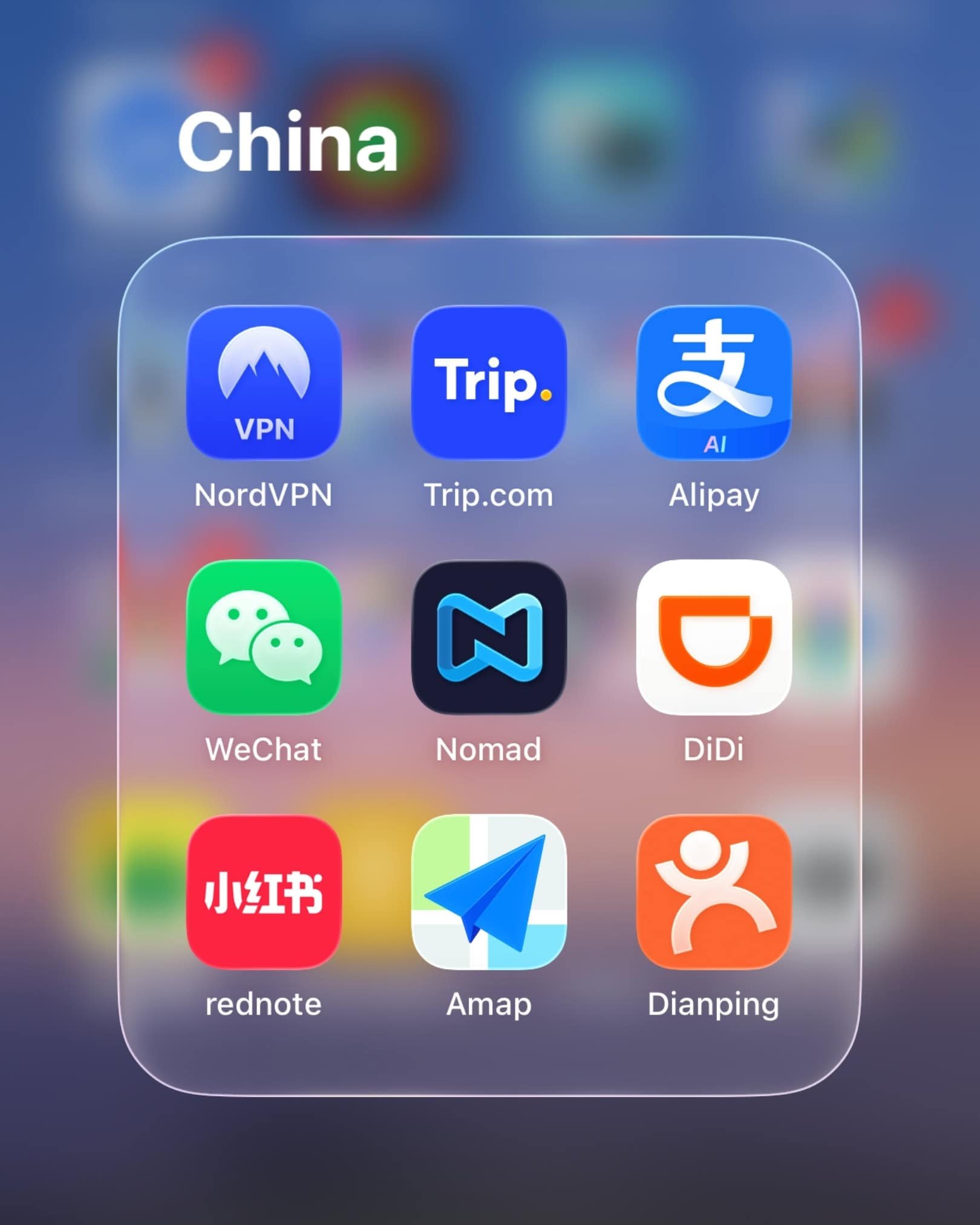
China can definitely feel intimidating to navigate as a solo traveler, but don't let the logistics hold you back!
These essential apps are a lifesaver and make the experience much more approachable.
While the big modern cities are easy enough on your own, booking pre-arranged excursions or using local guides is by far one of the best ways to explore rural provinces, smaller ethnic minority villages, and breathtaking landscapes that are otherwise tough to reach.
If you're still weighing your options on how to structure your journey, I broke down whether or not you should join a group tour in China based on my own experience touring southern China with Eastogo Travel. And if you're ready to dive headfirst into trip planning, check out my complete 2-week China itinerary for nature and culture lovers to start building your route!
PIN THIS FOR LATER